
दीर्घकालीन स्थिर एन्जाइना (Chronic Stable Angina)
कस्ता लक्षण हुन्छन्?
सामान्यतया हिँड्दा, उकालो चढ्दा, भारी काम गर्दा वा मुटुमा भार बढ्दा छातीमा दबाब, कसिएको महसुस, भारीपन वा असहजता हुन्छ। केही व्यक्तिमा छाती दुखाइभन्दा सास फेर्न गाह्रो हुनु, मेहनत सहन नसक्नु, असामान्य थकान वा काँध/पाखुरा/जबडामा असहजता नै प्रमुख लक्षण हुन सक्छ। लक्षण प्रायः उस्तै स्तरको मेहनतमा दोहोरिन्छन् र आराम गर्दा वा नाइट्रोग्लिसरिन लिँदा केही मिनेटमा कम हुन्छन्।

गम्भीरता कसरी वर्गीकरण गरिन्छ?
चिकित्सकले Canadian Cardiovascular Society (CCS) Class I–IV प्रयोग गरी एन्जाइनाको गम्भीरता वर्णन गर्न सक्छन्: Class I — सामान्य गतिविधिमा लक्षण छैन, धेरै परिश्रममा मात्र। Class II — सामान्य गतिविधिमा हल्का सीमितता। Class III — सामान्यभन्दा कम गतिविधिमा पनि लक्षण। Class IV — कुनै पनि गतिविधिमा वा आराममा पनि लक्षण। यसले उपचारको तीव्रता र थप जाँचको आवश्यकता निर्धारण गर्न मद्दत गर्छ।
यो हृदयाघातभन्दा कसरी फरक छ?
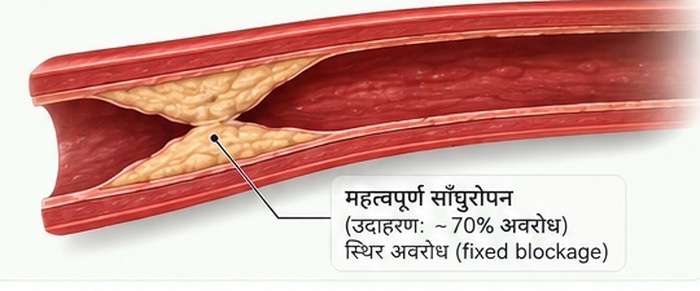
स्थिर एन्जाइनामा प्लाक सामान्यतया नफुटी, स्थायी रूपमा साँघुरो भएकै कारण मेहनतका बेला मात्र रगत अपुग हुन्छ। हृदयाघातमा भने प्रायः प्लाक फुटेर वा घस्सिएर त्यहाँ रगतको थक्का बन्दा अचानक धमनी बन्द हुन्छ र मुटुको मांसपेशीमा स्थायी क्षति हुन्छ। स्थिर ढाँचा अचानक बदलिनु — कम मेहनतमा नै दुख्न थाल्नु, आराममा पनि दुख्नु, लामो समयसम्म रहनु वा तीव्रता बढ्नु — यी सबै "एक्युट कोरोनरी सिन्ड्रोम" को संकेत हुन सक्छन्, जसमा तुरुन्त मूल्याङ्कन चाहिन्छ।
कसरी जाँचिन्छ?
लक्षण, जोखिम कारक र शारीरिक परीक्षणपछि — आराम अवस्थाको ECG, व्यायाम-सहितको ECG, स्ट्रेस इमेजिङ, कोरोनरी CT एन्जियोग्राम (CCTA) वा अन्य परीक्षण बिरामीको समग्र जोखिम र अवस्थाअनुसार छनोट गरिन्छ। सबैलाई क्याथेटर-मार्फतको एन्जियोग्राफी आवश्यक हुँदैन।
उपचार
जोखिम कारक व्यवस्थापन — LDL कोलेस्ट्रोल घटाउनु, रक्तचाप नियन्त्रण, मधुमेह व्यवस्थापन, धूम्रपान त्याग, नियमित व्यायाम र स्वस्थ खानपान — अत्यन्त महत्त्वपूर्ण हुन्छ। लक्षण नियन्त्रणका लागि बिटा ब्लकर, क्याल्सियम-च्यानल ब्लकर, नाइट्रेट वा रानोलाजिन जस्ता एन्जाइना-विरोधी औषधि प्रयोग हुन सक्छन्। धमनीको संरचना उच्च-जोखिमपूर्ण देखिएमा, वा औषधिले पनि लक्षण पूर्ण नियन्त्रण नभएमा, स्टेन्ट (PCI) वा बाइपास (CABG) विचार गर्न सकिन्छ।
बिरामीले प्रायः सोध्ने प्रश्नहरू
स्थिर एन्जाइना हृदयघात हो?
होइन। यो कोरोनरी धमनी साँघुरो हुँदा परिश्रमको बेला हुने दुखाइ हो, जुन आराम गर्दा वा नाइट्रोग्लिसरिन लिँदा कम हुन्छ। हृदयघातमा भने दुखाइ आराममा पनि रहन्छ र मुटुको मांसपेशीमा स्थायी क्षति हुन्छ।
दुखाइको ढाँचा बदलिएमा के गर्ने?
दुखाइ पहिलेभन्दा बढी बेला हुन थालेमा, कम परिश्रममा नै हुन थालेमा, वा आराममा पनि हुन थालेमा तुरुन्त चिकित्सकलाई सम्पर्क गर्नुहोस् — यो अस्थिर एन्जाइनाको संकेत हुन सक्छ।
नाइट्रोग्लिसरिनले काम नगरे के गर्ने?
५ मिनेटपछि पनि दुखाइ नघटे र चिकित्सकले तोकेको दोस्रो मात्रापछि पनि नघटे, तुरुन्त एम्बुलेन्सका लागि सम्पर्क गर्नुहोस् — यो हृदयघातको संकेत हुन सक्छ।
मेरो अर्को कदम
- मेरो निदान (Diagnosis) को सही नाम के हो?
- रोग हल्का, मध्यम वा गम्भीर कुन स्तरमा छ?
- मलाई अर्को कुन परीक्षण चाहिन्छ?
- मेरो औषधि किन दिइएको हो?
- म कति व्यायाम गर्न सक्छु?
- मेरो परिवारका सदस्यले जाँच (Screening) गर्नुपर्छ?
- अर्को फलोअप (Follow-up) कहिले?
अन्तिम पटक चिकित्सकीय समीक्षा: अगस्ट २०२६ · प्रमाण अद्यावधिक: ACC/AHA हालैका दिशानिर्देशसम्म